Monday, April 2, 2012

Chidren's Barnyard


It was a struggle to return to writing my blog again. I quickly realized that staring at the computer, eyes burning, wasn't helping me to return to writing. It hurt, because sitting and staring at a computer is what working is supposed to look like, and working is supposed to mean getting things done.

One morning,
with burning eyes and nothing to say, I shut down my computer and followed myself on a walk. I walked out my door and down Central Avenue until I found myself on the UNM campus. I walked past the sculpture of Flamenco dancers, past fast food, skateboarders, and around the duck pond, until I landed at an old favorite studying spot, the West Wing of Zimmerman library. Surrounded by students studying Spanish verb conjugations and the ventricles of the heart, something unexpected happened.

I began to write by hand.

And that's what got me writing again.

It reminds me of this, that Lynda Barry painted with a brush, in her book "What It Is."

I have found that writing by hand is faster than a computer way of doing it, though I know it's not as easy. Tapping a finger is not as complicated as making an original line in the shape of an S. Handwriting is an image left by a living being in motion. Only by being a being in motion can you know about it. It's hard to do at first. It can make you feel crazy. Different parts of the brain are used when we make an S by hand and more of the body than a finger tap. Images seem to come from this kind of being in motion.

How strange to be young, to struggle to learn to make an S by hand, then later in life have to be reminded of the importance of making an S by hand. Robert Johnson wrote that Carl Jung said there are essentially two problems in therapy. The problem of the 21 year old and the problem of the 45 year old, regardless of the actual chronological age of the patient. The 21 year old's problem is how to get into life, while the 45 year old's problem is how to get back out of life.

Sunday, April 1, 2012

Field Days


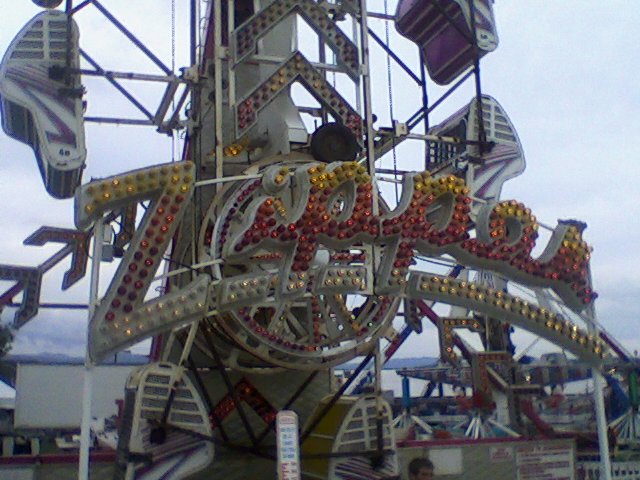
One of the best things about being in Vermont in August is the Addison County Fair and Field Days. Known to locals simply as "Field Days," it's the size of this fair, and the energy of this fair, that makes it not quite like most other fairs. Field Days doesn't try to outdo itself. It remains, essentially, the same.

It was at Field Days, in junior high, that I first had fried dough. I always liked its straight forward name. Later in my travels, I would discover that most cultures have their own version of fried dough. Native Americans have fry bread, the Amish have funnel cake, and in New Mexico, there are sopapillas. Japan has takoyaki, which is fried dough with bits of octopus and a center of mayonnaise.

Saturday, March 31, 2012

Pie


Who knew raspberries came in so many colors? I adore Lauren's rustic pie crusts, even more beautiful when baked. I couldn't have known when I took this photo that a month later, the worst piece of pie I ever tasted would be the best I ever had.

Friday, March 30, 2012

Whole Earth


I loved how the "Whole Earth Catalog" held the possibility of so many things to be made, and all the things needed to make them. Things made of straw or metal or wood or yarn. It held the secrets of how to use medicinal plants or build a house out of tires and mud. You could learn to renovate an old bus and make it your home, and there was even an address to write away to, to order an old bus.

Looking at the catalog more than thirty years later, I noticed that the hippies that looked so old to me then looked so young to me now.

It brought to mind an image of my parents
in our kitchen dividing a large bucket of molasses into canning jars, when they ran a co-op out of our home. I saw individual paper bags of oats and nuts, and how other long haired parents with little kids like me came by to pick them up.

I saw my mom and her friends wearing overalls and braids, and my dad and his friends with long hair and beards. I remembered how I never had a meal that wasn't made at home, how I carried my lunch to school in a basket, and how I once landed a pitchfork on my toe when I was digging in the garden that filled our back yard.

I remembered too, how it suddenly, unexpectedly, unknowingly, began to change. Somewhere around the time my parents went to see the movie "Saturday Night Fever," and I started wearing a Bee Gees belt buckle.

Looking closely, now, at the "Whole Earth Catalog," I noticed how dads were just young guys with long hair trying to do their best, and moms were moms at a time where women were caught in a cross fire of change. How they were trying to be moms and dads while also trying to grow corn, can tomatoes, make chutney, stack wood, build dulcimers, bake bread, sew quilts, knit sweaters, fix their own cars, make their own gifts, and work to pay for it all.

How could it not fall apart?

Images don't decay, they pass through time unhindered -Lynda Barry

Thursday, March 29, 2012

Foote Street Farmstand


Sun tea, blue glass. My friend Lauren ran a beautiful farm stand for a few years, before moving on to other projects, and if you got to experience it in that time, you were lucky. I loved sitting on a wooden stool in the sun on cool summer mornings with hot chocolate and a homemade muffin. Lauren's cooking and sense of beauty is what is right with the world.

In this time where I'm under so much stress from trying to help people who are sick from being under so much stress, it's what I long for.
Time to cook, and time to grow things to cook, it's a sign of wellness that I hold as a baseline, something I'm working to return to.

Recently, on a trip to Taos, I came across a "Whole Earth Catalog" from 1975 at a used book store. I was flooded with memories of long afternoons
curled up next to the wood stove on our old blanket covered couch, lost in that catalog. There were only addresses to write away to for information, there were not even phone numbers. I remember the deep intrigue I felt as a kid, seeing those addresses from far away and mysterious places like Iowa, Alabama, and Northern California.

In these days of instant information, clicking and getting, and phones without cords, it's hard to imagine how we had the patience to wait for what we wanted. Yet, back in the days when we had to wait, it felt like there was more time.

Wednesday, March 28, 2012

Family Circus


I found these lanterns near the Middlebury Falls, behind the Marbleworks. Their shape reminds me of a story Lynda Barry once told about "Family Circus," that circular shaped comic that's been in the top corner of the newspaper forever.

When she was little, before she could even read, Lynda loved to lay on top of the newspaper and "read" the comics. She would look at the pictures and imagine what was going on, and her favorite comic of all was "Family Circus." It was soothing and complete in its shape, and the family seemed whole and happy. Her own family was troubled and broken, and in gazing at the circle she would feel herself stepping through, away from the chaos and safe with this peaceful and ideal family.

Her favorites were the ones that showed the black dotted trail of Jeffy, who was her age at the time, as he wandered through his neighborhood. She wanted to see all that he saw and loved to pretend she was wandering with him.

As she grew older, feeling lost and like a misfit, she was drawn to doing drawings of her own. Though her own work is dark and real, making you both laugh and cry at once, she continued to secretly love "Family Circus," even when it was no longer cool to do so. At Evergreen State College, her best friend, Matt Groenig, published one of her comics in the school newspaper while she was away on vacation. From there, her comics ran in alternative newspapers for almost thirty years.

As an adult, she was invited to a convention for cartoonists. She was surprised to think of herself as a cartoonist, but she went. She loved meeting all the artists she'd heard of for years, but when she was introduced to Jeff Keane, who has been drawing "Family Circus" since his father Bil, its creator, died, she burst into tears. She described it as snot spouting everywhere, shaking, gutteral sobbing tears. Embarrassed, she stepped away to pull herself together. When she returned though, and tried to shake his hand, it happened again.

She couldn't understand it, it felt like a deep rumbling from within. She went to the restroom to pull herself together. "Why on earth am I crying?" she asked when she looked in the mirror. What she saw looking back was the tearful face of the little girl who, years ago, unsafe in her own home, felt safe in a drawing.

Jeff Keane was Jeffy, and when she met him,
all those years of survival, all that she'd held inside came pouring out, because she realized she really did step through the circle. And the way she got there was by doing a drawing of her own.

Tuesday, March 27, 2012

Middlebury Falls


When I first heard of occupational therapy, and had my first thoughts that maybe it was a job I could do, I shadowed an OT at a nursing home in Middlebury to see what it was like. The only patient we saw that morning was 95 years old. She was laying in bed, and refused therapy as soon as the OT entered the room. Despite attempts both firm and kind, the patient shouted "I'M 95 YEARS OLD, I'VE WORKED TWO JOBS ALL MY LIFE, THIS IS MY CHANCE TO REST!!"

When I left the nursing home that day, I walked quickly away. I walked and walked, bought a green tea and kept walking. Drinking green leaves, walking over green grass, feeling wind and light, stopping only to watch the Otter Creek crash and churn over the rocks at Middlebury Falls. That hour in the nursing home pushed me fiercely into life.